Showing posts with label books. Show all posts

Friday, January 26, 2018

Two Years Eight Months and Twenty Eight Nights by Salman Rushdie

I just hate it when time plays spoilsport.
So now, instead of the long rant that I had planned to unleash upon the unsuspecting audience (which I still will, but only in a few days) I am having to console myself by merely giving a rating to this book that I finished reading yesterday.
However, the out-of-the-box thinking chap that the author is, it would be most unfair if I rated his book using anything but an out-of-the-box rating scale wherein I refrain from comparing his book, to books written by other authors who are, well, not-Rushdie and by that definition simply NOT presentable on the same rating scale that Rushdie's books can be rated using.
As a consequence, I have no choice but to present my verdict in the following manner:
On a scale of Grimus to Shalimar the Clown, Grimus being the lowest rating assignable followed- in that order- by Haroun and the Sea of Stories, The Enchantress of Florence, Fury, The Moor's Last Sigh, Midnight's Children, Shame and then Shalimar the Clown; with Shalimar of course being the highest rating possible, Two Years Eight Months & Twenty-Eight Nights, in my humble opinion, falls somewhere between Grimus and the Enchantress.
How I wish the author understood the importance of remaining tethered to a discernible plot-line!
I wouldn't say this is a bad novel (because it isn't), but it most-certainly is one of his weakest stories yet.

Sunday, January 21, 2018

Wrap it right


I am well aware of the commercial factors involved in this decision, but when selecting a cover for your book, please do put a thought into what you want a person buying your book to perceive your book as.
If what you have written is a simple, broad-stroked and more or less stereotypical tale which is grammatically correct and devoid of typos but nothing more than that, and your cover emanates an aura of advanced literary genius, promising complex and layered writing, you should be ready to be judged accordingly.
I find it difficult to believe that it is not possible for a writer to understand what kind of cover his or her novel deserves. And even if I'm wrong... even if there is a writer out there who claims to not have what it takes to match the level of his writing with a picture he's going to wrap his writing using, I'd say, why not go for a simple cover?
Two examples I can give here of excellent covers that do not deceive the readers in any way are below:

1. The Joke- Milan Kundera

Yes, it is hideously deceiving, but only in the sense that Kundera's writing is as beautiful as the cover is ugly. Yet, you keep going back to the cover and take comfort in its simplicity as the author narrates his heavy-on-philosophy story about a political ideology gone wrong and the pointlessness of delayed revenge.
2. Twice Written- K. Sridhar

I bought this book just because the cover caught my attention. I knew nothing about the author when I did. And while I may not have a rave review to offer overall (some scenes are powerful and excellently done, the rest is very good but nothing beyond that), the level of writing in this was actually as layered as the cover made me anticipate it to be. Whether good or bad is a different question altogether. My point here is, after finishing the book I did not feel deceived.
In my opinion, a fancy cover does more harm than help- that is if you're aiming higher than selling your first two hundred copies.
Ditto for blurbs.
Disclaimer: The post may well not apply to cases where the author has had no real say in the making of the cover and the blurb.

Paprika (2007)


**** Forewarning: Do not read further if you are looking for a titillating review of Tinto Brass's soft-core porn film that goes by the same name. My verbose prose will only disappoint you (and quite possibly cause undesired shrinkage) ****
A chance encounter with a track (link given below) from this film that I had seen a while back made me spend the whole of last week exploring the rest of its tracks as is my habit of doing with any musical score I find interesting.
Then, having exhausted my ears from five days of on-the-loop, non-stop hearing of all tracks during my nearly three-hours-a-day commute, I simply couldn't help but re-watch the movie today.
I must confess, the amount of creativity employed by the legendary animator, late Satoshi Kon in this film is breath-taking.
While it begins as just another competent animation film, the real artistic brilliance of the plot, the visuals, the background score and of course their merger into one is unveiled to the audience only in the form of layers, the deepest of which is accessible to only those whose interest is genuinely piqued by 'show-dont-tell' stories.
As the film does not face the limitations of live-action cinema, there is a liberating amount of creative effort put into each shot to ensure that the manga animation, especially later on, is bursting with an equal portion of maddening glee and terror that one can relate very well to as emotions experienced during dreams and nightmares.
Also, I believe this is another good example of how feminism can form a key element of the story arc without tipping the scales too far into preachy territory.
I loved all aspects of it, including how the director is able to steer the story in a straight path despite touching on varied genres such as fantasy, sci-fi, romance, horror and (as mentioned earlier) the philosophy of feminism.
Recommended.
PS: I preferred the Japanese version with subtitles over the English dubbed version. The voice-overs in the former are way more effective.
PSS: This is definitely two artistic notches above Inception.
Click here and here to listen to my favourite tracks from the OST album.

Catch trailer:


Exit West by Mohsin Hamid


As someone who is fascinated by free-flowing sentences and is fascinated even more when broad-strokes are done well, what I wish to say, having finished this novella that has been marketed as a full-fledged novel, but which in actuality is a short story masquerading as a novella in the first place, that is if I am to keep it short, which in this case would be sadly but surely befitting, is this-
Viewed from a literary eye, and nothing more, Exit West works remarkably well.
This is another exceptional experiment by Hamid in dabbling with a radical style of writing that is somewhat in line with the progression he has demonstrated over the previous three books authored by him, namely, Moth Smoke- a dream debut that is still conventional and hence more detailed in its telling, The Reluctant Fundamentalist- his Booker shortlisted second outing in which Hamid began to show clear signs of veering towards a minimalist approach in storytelling, and finally How to Get Filthy Rich in Rising Asia- his third, through which, if you are to ask my opinion I will tell you, he showed the world how to write a perfect novella that did not have a single word in it that wasn't required.
However- and now we come to the unfortunate part, the part I would never have wished to write about an author who has become a silent mentor to me in some truly dark times both in my personal life and my life as a budding penman- once the literary eye is shed, once the monocle that relishes uniqueness of style over all else is removed, Exit West is an ordinary, weak tale lacking depth in both character and plot development.
The themes the novella deals with, emigration and the dynamics of modern-day love being the primary two, are most relevant in today's times, and much as I would like to focus just on the latter which Hamid does get right, it is the former that should have been dealt with better, and if possible with greater clarity, given the urgency to understand the real-life emigration crises clearly overshadowing the need to understand the dynamics of modern-day love, both in the context of this story and otherwise.
To conclude, as with his other works, the author found atleast two different ways to make me love his book. And I will admit, there is a lot to like and love in Exit West.
Alas, in many other, equally relevant ways, I was left sorely disappointed.

Here's to hoping that Hamid rewinds, resets or atleast recovers a part of his original writing style that had the power to move mountains but at the same time considered it important to actually show the mountains being fucking moved instead of glossing over all the details.
Click here to buy.

Saturday, January 20, 2018

Ghachar Ghochar by Vivek Shanbhag


In many ways, critiquing a piece of art that is categorized as slice-of-life can be a tough ask.
If taken in its literal sense, slice-of-life would mean something that represents a segment or a portion of real life.
And as many will agree, there is always this question whether one can consider oneself fully capable of judging the quality of something that is meant to represent real life, where the fact remains that when it comes to judging the quality of their own lives, most humans are perfectly incapable.
Now, you could argue with me on the above point. You could, for instance, contest given that as humans both the reviewer and the review readers are in the same boat, how capable either is in judging the quality of their respective lives is of little relevance.
And to that I will gracefully concede. It is quite possible, yes. I will not deny what I do not have evidence to defend against.
In fact, if we think further along this line, it may well be that this possibility is precisely why I, as a reviewer, can muster the confidence to proceed with this here review of a book that, if you ask me, embodies the genre of slice-of-life in its utmost essence.
Originally written in Kannada by Vivek Shanbhag and translated to English by Srinath Perur, Ghachar Ghochar begins with its narrator describing the interiors of Coffee House, a bar cum restaurant that he is a regular customer at, owing to its old world charm and its laid back feel that reminds him of days before things became complicated and messy.
Through the observations he makes as he sits in a corner of the eatery, we understand that our narrator is a simple man of simple roots, even before we are informed of him hailing from a family of lower middle class bearing that has only in recent years seen a drastic turn of fortune. 

We also understand he is jobless, low of ambition and desires, wishing instead to survive through the day, one day at a time while putting in the minimal effort required to not break his languid routine that is being financed by his uncle’s business.
He is timid in his interactions with others- especially his family of six- and is shown to be happy playing a passive spectator to any and every proceeding, including even his own marriage to the feisty Anita.
As the story proceeds further, we are introduced with each subsequent chapter to the other occupants that share the narrator’s household alongwith his wife. 

These include a strong-willed mother who knows her priorities too well, a passive albeit repercussion-fearing father, a sister who has returned home after her own marriage turned sour, and a paternal uncle who looks after the family business of trading in spices (or is it just plain spice-trading business, one can only wonder knowing so much yet so little of Chikkappa’s shrouded and shady dealings).
Family dynamics is the key here (after all, we are talking about a traditional Indian family living jointly under one roof) and Shanbhag’s narrator sticks to elaborating the shift in these dynamics over the course of their journey from near rags to suddenly acquired riches.
And with the addition of another member to the equation in the form of his strong-willed and principled wife, the narrator then describes how things are on the verge of going south (or have they gone south already? Again, a question that is left for the reader to ask and answer and ask again, with a shudder).
A fairly simple plot, is it not?
Well the answer is of course a ‘yes’. And yet it is also a resounding ‘no’.
Which reminds me of the conundrum I had began this piece with on how critiquing a slice-of-life artwork can, in many ways, be a tough ask owing to its connection to real life.
Bear with me as I attempt to un-complicate this conundrum for you, my dear reader, for even if what I mentioned at the beginning of this article still holds true (especially when the reviewer’s own life is not of any noticeable quality) there is, as is the case with most other complex problems, a simple solution to this conundrum; a thumb rule that might help in first decoding and then deciding if a slice-of-life artwork has been done right or not.
This thumb rule is simple to use because it has fuck-all to do with all matters abstract, fanciful and flowery.
It goes like this- Real life has two characteristics. Both are distinct. First, there is what we refer to as the ‘real’, and second, there is what we call the ‘ordinary’. A story that focuses on replicating the ‘ordinary’ is slice-of-life done wrong (sometimes horribly wrong).
On the other hand, a story that focuses on capturing what makes real life ‘real’ is slice-of-life done right (which, again, may not necessarily mean that the story works overall, but that is a separate question with a separate set of thumb rules attached to it).
To my good fortune, and also to the readers’, I found that Ghachar Ghochar passed this thumb rule with flying colours.
Shanbhag’s narrator and the other members of his family feel as real as any person you will have met; people whom you are fairly acquainted with but do not wish to know more about- perhaps owing to their borderline-mundane mannerisms or perhaps owing to your fear that there might be more to them than meets the eye, and not in a good way either.
The protagonists, if they can be called that, are as hypocritical as men in real life seldom aren’t. Their natures are layered just as their real life counterparts from most joint families, and with the peeling of each layer, Shanbhag reveals just the right amount of rot to make us feel squeamish but not so much as to make us stop turning the page and look away completely.
Character portrayals aside, the writing flows with a genuineness that seems to have transcended the barrier of language. Each scene plays out in the reader’s head with a clarity that is hard to come by these days, again a sign of the writer’s talent at knowing what makes a scene feel ‘real’ and not just ‘ordinary’.
Perur’s translation works with dual brilliance, first, as an excellent standalone English prose piece, and second, as a piece that retains most of the local flavours one would ordinarily experience while reading in the language of the geography the story is based in.
At a hundred and fifteen pages, the book is able to cover tremendous ground without sacrificing on either the pace or the detailing that was needed for the story to leave a lasting impression.
Overall, I have no hesitation in giving Shabhag’s Ghachar Ghochar top marks.
It is remarkable how the novella is subtle enough to loosen you up and to draw you in, and yet it is also strong enough to keep you attentive and worried about the deeper, darker implications of all that is left unsaid in the tale.
There are many morals here, the loudest and the most obvious one, of course, being- money corrupts.
For me, though, what hit the mark with a much harsher intensity, even if it was only present through the story as an undercurrent, was the importance of learning to differentiate between the ‘unwillingness’ to do bad and the ‘incapacity’ to do bad.
Mind you, one is the spitting image of the other, which means by the time the latter reveals its true self, you are already in harm’s way.
Strongly recommended read.
Click here to buy.
(This review first featured in the April issue of Telegram last year. Helmed by a talented lot having excellent taste in art- and available here for a minimal price of thirty bucks- the magazine is a fantastic platform for amateur writers to showcase their work alongside like-minded others who value quality writing. Do check it out and subscribe.)

Sunday, November 6, 2016

A Dog Eat Dog-Food World by C.Suresh

And so I am finally done doing what I should have, more than a year ago.
Reason for delay, you ask?
Well, aside from the on-and-off relationship there seems to be going between me and ‘reading’ these last few months, let’s just say I am quite intimidated by books that fit easily into my pocket but are NOT books that are written by or written keeping in mind simple-minded folk.
Not convinced, you say?
Give you another example, you want me to?
Try Heart of Darkness by Joseph Conrad. (96 pages, that too double spaced!)
Only difference being, after reading Conrad’s peculiar little pocket dynamite, I was as scared and intimidated as I was before I picked it up.
But having finished reading C. Suresh’s peculiar little pocket dynamite, aptly titled A Dog Eat Dog-Food World, I must confess that far from being as intimidated as I was before starting to read, I am now overcome by a most singular smugness, a smugness that comes out in me when I feel I am able to identify with something, like no one else might.
Unlike what the synopsis on the back cover of the book claims, A Dog Eat Dog-Food World, atleast for me, did not come across as a pseudo-history of marketing management that bears no resemblance to the actual history.
Infact, it may well be one of those rare books that, in trying to capture the history of marketing management- metaphorically or otherwise- cuts so right to the chase that it ends up coming closer to the ‘actual’ history than most other tomes written on the subject by knowledgeable experts ever might.
The book begins with an explanation by the author on how history, in the form that is available to us, may or may not be the real deal, considering what gets recorded and what survives the passage of time is but a list of achievements of the few who either achieved something that required them to be ‘active’ or achieved something lesser but still ensured that what they achieved was ‘actively’ promoted.
As in History, so in pseudo-history, concludes the little prologue which I found overall to be humorous but agreeable, and also strangely informative.
(I use ‘strangely’ here because it IS strange when a chapter that has no graphs, no charts, and no details whatsoever of the chronological order of events or incidents that collectively form the term ‘History’, is able to impart- and is also able to convince the reader that what is being imparted is- historical information.)
From there we proceed to meet, one by one, the five main characters of the story, each of whom is introduced at different stages of the telling, perhaps so we, the audience, can enjoy better their standalone idiosyncrasies first before the story advances into more complex territory and pits them against one another even as the grand scheme of things becomes clearer with each passing page.
The premise is Dog and Cat Foods manufacturing, with Spike Fortune, his nephew Jerry Fortune and their Head of Marketing Tyke playing the masterminds behind the former, and Tom Rich with his nephew Jasper Rich forming the reluctant rivals who mastermind the latter. Fortune starts the business because he wants to lose all his money before he dies and doesn’t know how to, and Rich enters the race as prime competitor, because he has never been second to Tom at anything since school days.
The rest as they say is history.
Sounds simple, no? Of course it does.
And simple it is, but only if I am to think of it in one way- that this is but a simplified version of actual history, not just of marketing management but of the entire world of commerce as we see it in present day.
For, as much as I believe that stats and official records have their place of importance and cannot be refuted for a piece of satire that talks in Dog and Cat Foods metaphors, I cannot imagine the history of marketing management (and commerce in general) without a Spike, a Jerry and a Tyke in every place of business that received a mention in the factual history records, and- more so- a Tom and a Jasper in every competing place of business that perhaps didn’t receive a mention on account of it coming second.
Afterall, can it not be said that it requires some level of madness- some form of physical or mental disorder, to the conservative eye atleast- for a person to become an entrepreneur and then a competitive businessman?
And if that is acceptable, then can it also not be said that the men (and women) who made this History of commerce happen will most-certainly have been as- if not more- idiosyncratic as the five characters portrayed in this novella?
Now THAT is what the official records will never tell you. Which is still fine, as I know and acknowledge that functional academics are no place to read about the idiosyncrasies of highly successful people.
But THAT is also exactly what makes A Dog Eat Dog-Food World such a rare book.
Because, once it is stripped of its circuitous albeit lyrical writing, of its light tone, of its laugh-out-loud moments, and of its effective use of a narrative style that most authors would find hard to execute, A Dog Eat Dog-Food World is a narration of these unrecorded facts that are the reason behind everything that is wrong with commerce today.
It is about the sickening condition of today’s corporate environment where employees create invisible fires and douse them noisily to receive recognition and reward without having to do any credible work.
It is about the saddening advent of cellphones and how a piece of plastic and metal gets constantly shoved into our faces as an essential fifth limb that no human can survive without.
It is about 24/7 news channels who, in their need for one-upmanship, have graduated from impartially presenting current affairs to producing useless noise.
And most of all, it is about us, the consumers, the silent protagonists of both History and this story, who allow men of ambition to not just affect our needs and desires, but to outright decide and dictate them for us.
In conclusion, this is one novella I would urge any and every person to read, understand and laugh, then read and understand some more, and smile knowingly.
On a scale of one to five, I will rate this book a solid four, one point being deducted for making me chew on my words from the earlier paragraph where I mentioned that I was far from feeling scared after finishing the book.
For, now that I am done with the review and have read it back to myself, as a modern day consumer, I am suitably petrified.
To order the book click here.

Friday, September 23, 2016

In the Light of Darkness- Radhika Tabrez


As most of you might agree, having to write a review of a debut novel penned by an acquaintance is- more often than not- an uncomfortable situation to be in. 
Of course, for most reviewers, it is also the easiest ‘uncomfortable situation’ to squeeze out of (after all, how difficult can it be to fit as many flowering-ly flattery and flatteringly flowery adjectives as one can come up with into a four para’d piece of generic praise that is aimed more at the author or at the association one shares with the author than at his or her book, right?)
But given that I am spending my time writing this review, and- more so- given that what I am reviewing now is only the first of many titles the author will get published under her name over the coming decade and beyond, I believe this situation rather warrants me giving honest albeit constructive feedback than me taking the easy way out of an uncomfortable situation.
In her debut novel, author Radhika Tabrez tells the story of Susan Pereira and Meera Vashisht, two women with disturbing pasts living together on a fictional island named Bydore. The former is a mother who has a strained relationship with her son whom she had sent away to boarding school as a kid and who has now grown up to resent his mother’s decision of keeping him away from normal family life. 
The latter is a young girl, a victim of domestic abuse who has been bruised both physically and mentally before she comes into the lives of Susan and the other inhabitants of Bydore.
The book narrates the events that made these two characters meet and subsequently become inseparable (‘They were family’, as the author points out in a few memorable passages in the chapters early on). It further narrates the events that bring Susan’s son Mathew back to Bydore and subsequently how each character who is fighting his or her own internal demons is given an opportunity by fate (as only fate and fairy tales can) to heal and to find peace in the company of one another.
While the plot is fairly simple and the telling linear, the author manages to put in some interesting passages, especially the concluding paragraphs of the first few chapters that can easily be recognized as quality writing. Even in the chapters that appear later, the one element that clearly shines through is Tabrez’s ability to describe pain and loss. 
The letter from Susan to her son is done quite well and spurs the right kind of sentiment inside the reader’s mind. I also liked how the writer tries to introduce humor in a few scenes where the characters involved are facing serious dilemmas. 
The writing in general flows smoothly- if only a tad slowly- and most sentences do not jar. The tone of the narration is even and also quite steady, something that I found appreciable given that this is a debut novel by an amateur Indian author.
However, what I say next is basis what I know of Radhika Tabrez’s capability as a writer and not basis the fact that this is a debut novel by an amateur Indian author.
Overall, I felt that In the Light of Darkness lacked a lot. The plot is too straightforward and so is the depiction of most of the characters, including the protagonists. I understand that at its core what the writer has aimed to tell is a simple story. It is however, the telling of it that could have been much more engaging had this simple story been shown through scenes and dialogue instead of employing a broad and omniscient style of narration. 
I believe this would have helped a lot in the readers feeling more for the characters and their circumstances. 
Events such as Susan’s death and few others that are pivotal to the story should have had a build up towards them and in absence of this they fail to make the kind of impact on a reader that the author would ideally wish for.
Halfway into the novel, I came across the below passage that I now consider as the best passage that there is in this novel:
Just as he was about to go inside, Matthew stopped suddenly, turned around and started scanning the crowd behind him, impatiently. His friends caught up with him a few seconds later. He looked at them in a way that meant goodbye; only he couldn’t bring himself to say the words. Finally, he spoke, his eyes unable to handle his remorse and bereavement anymore.
“Maanav… My mother is dead!” and he broke down.
I loved it because the dialogue at the end made the scene feel extremely real to me. Real, yes. But not ordinary- an important distinction that I felt the author should have made judiciously while writing other scenes, especially the key ones. The novel required more of this.
And now, for the benefit of the author (and also of others who might consider worthwhile the views of an as yet unpublished and unrecognized writer), I digress a little-
What makes an indie novel or film work?
Every time I attempt to articulate on my opinion in this matter, I am reminded of a scene in the last act of John Carney’s indie musical ‘Once’; a scene in which a side character is shown to be cooking in her kitchen. So, we have the actress who plays the female lead’s mother standing over a frying pan, sprinkling pepper into it, and then proceeding to run a skillet over it.
A five second shot, max. After that the montage moves on to shots featuring the lead actors.
Now that’s alright, don’t you think?
Guess again.
The problem is, you don’t even need to look closely to spot that what the actress is standing over, sprinkling pepper into and running a skillet over… is an empty fucking pan! So what you are basically watching is a character in a Hollywood film cooking invisible food.
A clear goof-up is what it is and not the only one that the film is full of. And Carney let all of these remain in the final film!
Now THIS is bad craftsmanship, don’t you think?
Well, guess again.
I have seen Once not once, not twice but atleast twenty times already (if not more).
It is a fantastic musical that makes you want to keep going back to it, both for the songs and for the innocence with which the love story between the two leads has been portrayed.
Yes, the ultra-low budget the director had to make do with shows at many places. The editing and the camerawork are shoddy. Some of the side actors are- as is evident in the scene I have mentioned before- either acting to act or hopeless at even that. But the film still comes together so well.
The reason being, Carney knew he wanted to make a good musical and therefore invested heavily in the elements that form the core of a good musical - the songs and the singers!
My point being, all things said and done about how one can perfect the art of writing/filmmaking, a storyteller must always remember that it is ultimately what lies at the core of his story that matters the most. Having a strong theme never hurts.
To conclude- both my digression and my review- In the Light of Darkness is a decent debut by Radhika Tabrez. However, I am of the opinion that the writer has a much stronger voice than this and has much stronger themes to write on.
I congratulate her on the book being published, which is no mean feat. I am however, more interested in seeing what she delivers next, considering that the experience from writing this book will only have made her a better writer than she already is.


Saturday, February 20, 2016

Review: A Valentines Day Story by Percy Wadiwala

To read the story, please click on the chapters below: 
Chapter I- The Girl                          Chapter II - The Boy

‘A Valentine’s Day Story’ begins just as every other Elveren narrative that I have had the good fortune of reading on account of my *cough* Honorary *cough* role as first level proofreader for young master Wadiwala: with a leisurely panache that sets the tone for the rest of the tale and assures the reader of this being no more an amateur piece of literature, than is any of P.G.W.(the original)’s noteworthy works.

What it also assures the insensitive and ungrateful audience of is that what is to follow demands from them, one and only one thing in return- to enjoy the story.

Surely that is no big ask, is it now?

Well of course, I must admit that to relish this manner of mature and deft story-telling, one would have to set aside all that is arduous and crippling, harrying and suffocating and- not to mention- outright boring, in his life. One would need to shed all that worries him, all that ticks him off and all that makes him want to smash his head through a six-inch thick concrete wall, before he is in any position to enjoy the tale.

In fact, let me do the honour of going a step further and describing to you, oh hardhearted reader, the most appropriate setting for reading an Elveren adventure, which is- sunset, at the beach, next to the waves, on a recliner, chilled Pina colada in one hand and a print of the story in the other. 

Enticing enough, no?

And yet I must state to you, with tremendous sadness, that there are so few a people who give a damn and there are so many who are so quick to move on without paying heed to such an undemanding request as is, of this talented writer. 

A simple request to just read what he is offering to you for free, even when what he is offering is, essentially, a premium piece of literature that deserves accolades equivalent or greater than those heaped upon the public school storytellers from the glorious days of our literary past. 

And fucking Cheat’n’Bugger is a bestseller for people! The horror!

Alright. I see ire seeping into my wordage. So let me finish the review before the good stuff gets drowned in the filth. 

Aided by a select handful of premise-perfect illustrations that etch certain lines, scenes and character descriptions into your brain with most singular precision, the author once again provides, for our entertainment, a breezy peek into the 'Wodehouse-esque' universe of Midgard-Caledonia with its peculiar inhabitants and their peculiarly idiosyncratic doings that result into some of the wittiest dialogues I have come across in my readings.

And what more! Love is in the air this time around, what with the tale being set against that auspicious mid-February phenomenon we call as Valentine’s Day, which, more often than not, leaves a trail of broken hearts in its wake. 

And thus, Jormund Elver, our unlikely hero- whom I am sure you will get to see more of if young master Wadiwala obliges and who I have come to consider as the perfect specimen of a colourful albeit clumsy Sagittarian- finds himself being dragged into another adolescent love triangle that is commonplace in life at Midgard-Caledonia High School.

If you are no stranger to Jormund’s world, I do not see purpose in spilling the beans here as you would be aware already how minor conflicts can turn gargantuan when the bumbling Elver gets involved.

If you ARE a stranger, you need only be aware that minor conflicts can turn gargantuan when the bumbling Elver gets involved. Period. So let me not talk any more on the story. 

But stranger or not- rest assured, you are bound to have fun while reading this and you are bound to feel light and airy from the inside after you’re done reading. 

Maintaining an almost stately poise in his flow, the author ensures that his character descriptions are done lovingly enough to breathe life into both their features and flaws. His portrayal of feminine beauty deserves a special mention here. It is omniscient, to say the least and when considered alongwith the intermittent pictorial insights, makes the frequency with which the male leads keep falling head-over-heels in love seem all the more plausible.

Mind you, the breeziness of the tale and other ancillary elements were not what appealed the most to me. What did, was the unabashed love for writing and the astonishing flair for language that the author possesses, such that each page of his rib-tickling narrative stands out so vibrantly in the readers’ imagination, making them ponder whether it is indeed a story that they are reading, or is it actually a painting in disguise. 
“What ho, old chap!” I am addressing Perseus now, in his own Elveren greeting style. 

“When will we be served ‘Something Fresh’ from your writing lair? My frontal lobe aches in anticipation mate!”

Disclaimer: Percy Wadiwala is a dear friend whom I- in my infrequent spells of optimism- like to think of as an actually intelligent version of myself. Though I may consider him as a mentor of sorts and turn to him for inspiration and advice from time to time, to think of this review as me trying to kiss his ass would only be the readers' own folly, causing him to miss out on something genuine. (Also I'm not sure if this helps but FYI, we've always gone Dutch so neither owes the other a penny for coercion or undue influence to enter the picture) 

Bottom line is, just read the bloody story because its a bloody good one. Peace.

Sunday, November 29, 2015

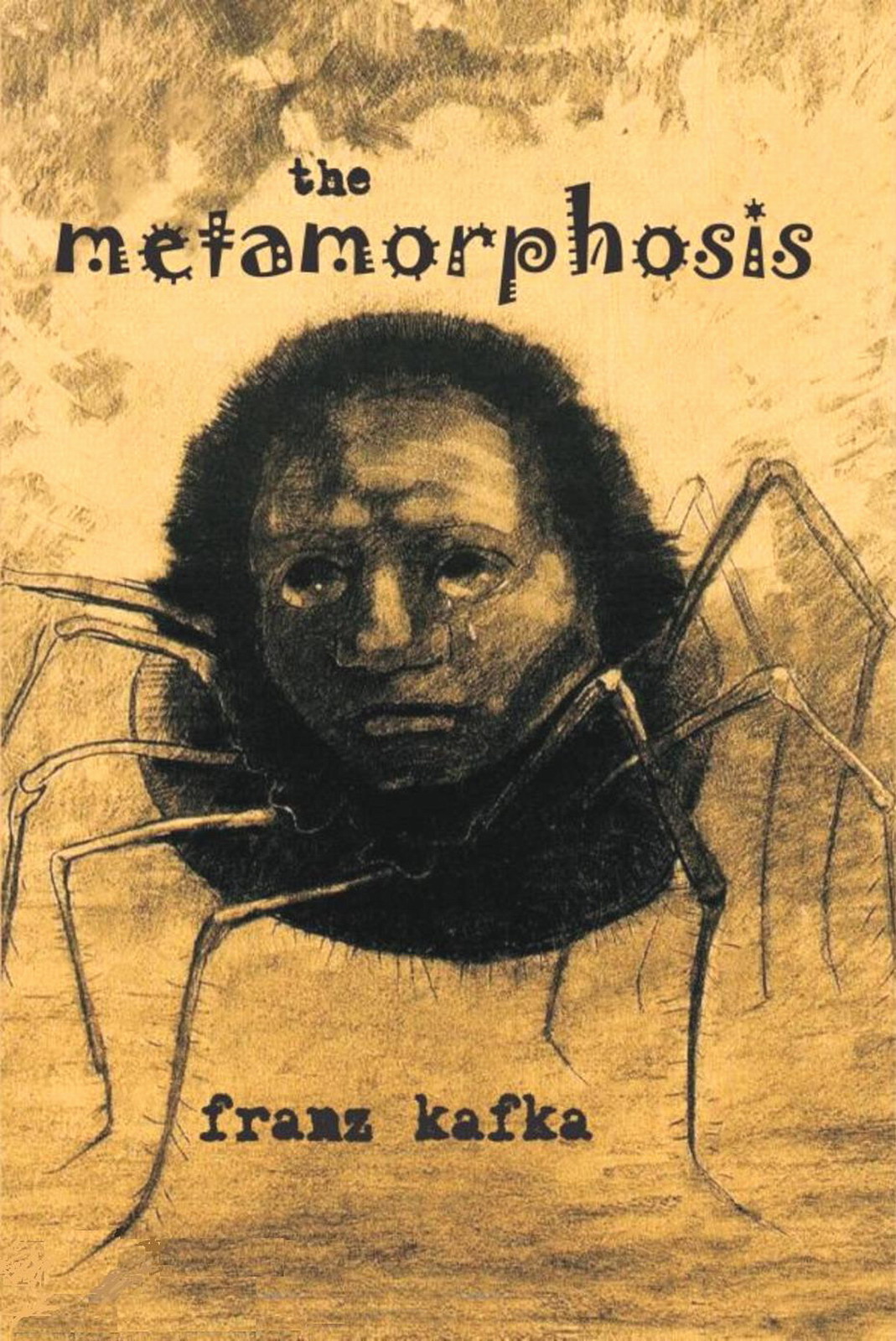
The Metamorphosis by Franz Kafka


My first Kafka!

And now I am a bit less clueless as to what it means when they call a piece of art 'Kafkaesque'.

No wonder the likes of David Lynch and Co. consider him their source of inspiration.

The story begins with our protagonist, Gregor Samsa (a metaphorical representation of Franz Kafka​ himself, if I am not mistaken), waking up one fine morning to find that he is not able to get out of bed as he has transformed into a large bug. Worried that he will be late for office- where he is employed as a travelling salesman- Gregor then makes several attempts to come to terms with his new body and get on with his routine before his father or his boss's chief clerk- who has come to his house to check why he is late today- will get a chance to reprimand him for being tardy and ungrateful.

Yes. That is how surreal it is.

And, to top it all, by never giving an explanation as to why the metamorphosis actually happened in the first place, Kafka ensures that the physical deformity does not take centre-stage in the plot even if it is precisely what triggered the conflict.
Kafka, in its stead, maintains a firm grip on the telling, ensuring that the focus remain on presenting it as an absurdist commentary on authoritarianism and the impact it has on an obliging mind.

Gregor, despite facing the misfortune of having metamorphosed into an insect-like creature, is never shown to rise above thinking about how the people around him will react; whether his family will forgive him for the burden that he has become by losing his source of income; whether his father will notice the little acts of obedience he is still displaying undeterred by the loss of his ability to communicate; whether his sister is aware of how grateful he is for trying to make life a little less miserable for him by clearing out the furniture so he be able to crawl around freely and by putting out stale food in his room, twice a day.

By setting the scenes inside closed rooms till the very end and by describing them in a bleak, claustrophobic manner, Kafka makes the reader experience better the unintelligent and over-complaisant mindset of the main character. Gregor never reaches a point where he can starts believing that he, and not his family, is the one who is suffering. Neither does he understand the selfish nature of the people who rule his life.

And that, I believe, holds true for any person who chooses to remain co-operative and accommodating of a society- or the few who govern it- that is ever ready to impose on anyone and everyone willing to bend.

The writing is 'German' stern, yet packs quite a few moments of absurdist hilarity that makes one smile, cringe and ponder- all at the same time, if you will believe me- at the silly little travelling salesman whose life has been turned upside down and yet whose first thought is, 'Heck, I'm going to be late for work!'


Certainly worth a read.

Monday, July 20, 2015

Gone Girl - Gillian Flynn


This was one mind-fuck of a book. I have no other term to describe it better.

On a side note, it feels good to have picked up, at long last, a book that shouldn’t take more than two days of reading time (which sounds like a lot to ask for when compared to the last one I unfortunately picked: King’s Cell which is-I am restraining myself here- excruciatingly longwinded and purposeless).

Been a while since I read this light. Phew!

But that’s not exactly a merit in itself, is it? I mean, why do you reckon I don’t normally go for light reads? Because more often than not, they are written by light headed writers whose capacity for depth and detailing is as rich as the average Bombay street-urchin.

The exact merit that I would want to talk about here- apart from the fact that this is one mind-fuck of a book- is this:

To the authoress’ credit, I can’t seem to think of any aspect, literary and otherwise, that has been sacrificed by her to present her book as fast paced.

The character depth and scene buildup is almost exquisite. The detailing is perfectly generous without making the prose lose its purpose at any place or become flowery (believe you me, ‘flowery’ is definitely not a word I would use to describe anything even remotely related to Gone Girl) and the amount and the standard of wit in the writing was stand-out enough to question my belief that nobody can beat Irish authors in black humour.  

And, this is a four hundred and fifty paged, no double spacing, no generous margins and regular font book we’re discussing here. That’s a lot of space for a lot of things to get out of hand and turn the whole manuscript jarringly messy.

So, I for one simply cannot imagine the kind of intelligence and brutal perception of people and situations that a person would require to come up with shit this fucked up.

And that’s not all!

What I cannot even BEGIN to imagine-forget simply imagine- is the kind of literary talent it would take to suppress the urge to go full crazy while coming up with shit this fucked up and continue to write in such an abso-fuckin-lutely controlled manner till the very end!

Phew, I’m just blown away. Crazy stuff!

Immersive storyline, taut writing style, nerve-racking plot development, vicious twists that leave you laughing out loud helplessly and characters who are such a horrifying mess, after a point you start to think of them as really perfect, or worse, perfectly real (in a twisted sort of way).

Marriage as an institution never looked this naked. Really.

Crap, I can’t review further without giving away precious plot points; that is if any of you are left who haven’t still seen the movie adaptation. (Well I didn’t, and I was rewarded thoroughly by getting to read without knowing what would happen next.)

Recommended for sure.

Flynn, you evil little genius you.

Do I even have a choice now of not ordering your other two books in the next ten minutes?


                       ****Slyly opens Amazon.in, debit card in hand***