Sunday, November 29, 2015

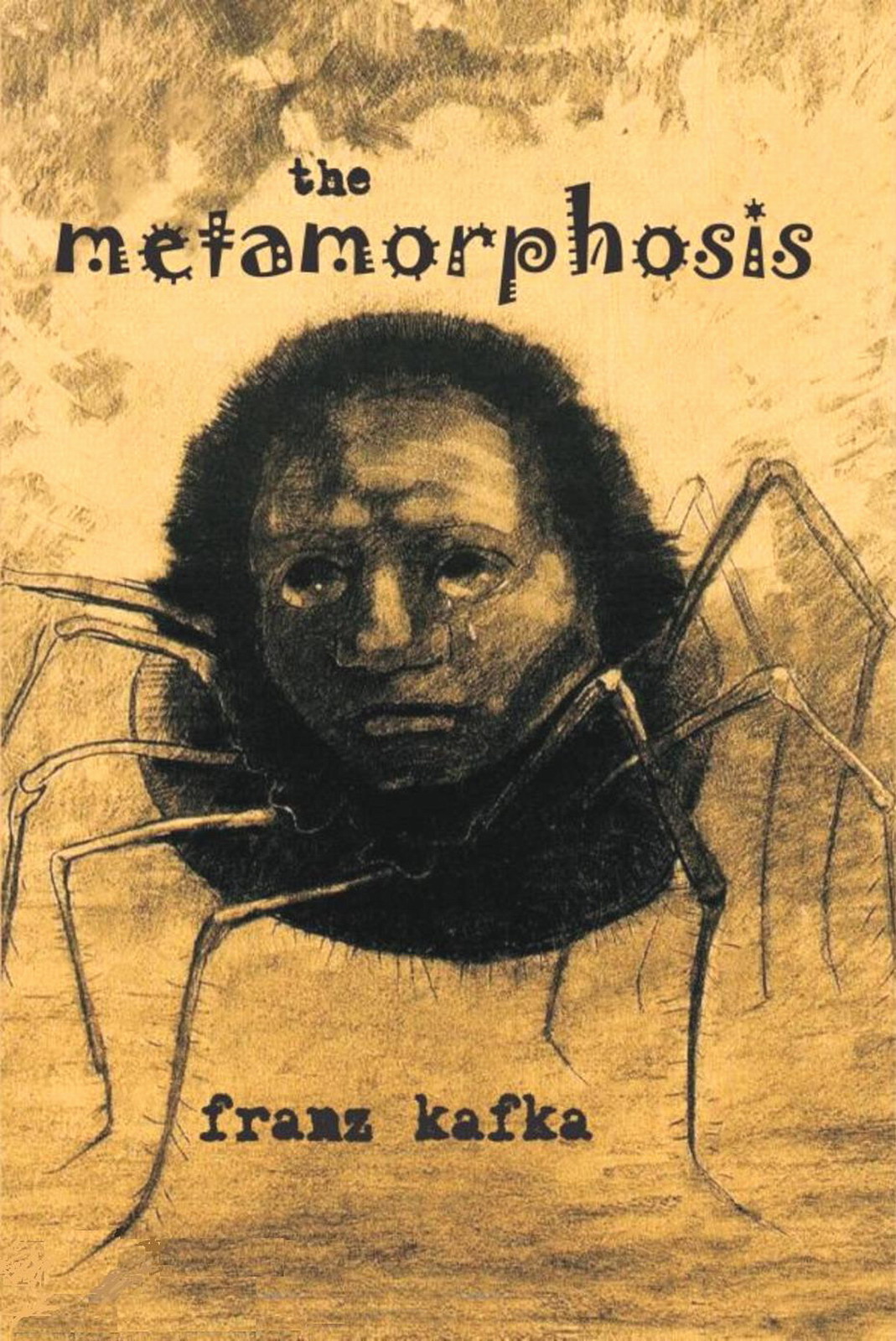
The Metamorphosis by Franz Kafka


My first Kafka!

And now I am a bit less clueless as to what it means when they call a piece of art 'Kafkaesque'.

No wonder the likes of David Lynch and Co. consider him their source of inspiration.

The story begins with our protagonist, Gregor Samsa (a metaphorical representation of Franz Kafka​ himself, if I am not mistaken), waking up one fine morning to find that he is not able to get out of bed as he has transformed into a large bug. Worried that he will be late for office- where he is employed as a travelling salesman- Gregor then makes several attempts to come to terms with his new body and get on with his routine before his father or his boss's chief clerk- who has come to his house to check why he is late today- will get a chance to reprimand him for being tardy and ungrateful.

Yes. That is how surreal it is.

And, to top it all, by never giving an explanation as to why the metamorphosis actually happened in the first place, Kafka ensures that the physical deformity does not take centre-stage in the plot even if it is precisely what triggered the conflict.
Kafka, in its stead, maintains a firm grip on the telling, ensuring that the focus remain on presenting it as an absurdist commentary on authoritarianism and the impact it has on an obliging mind.

Gregor, despite facing the misfortune of having metamorphosed into an insect-like creature, is never shown to rise above thinking about how the people around him will react; whether his family will forgive him for the burden that he has become by losing his source of income; whether his father will notice the little acts of obedience he is still displaying undeterred by the loss of his ability to communicate; whether his sister is aware of how grateful he is for trying to make life a little less miserable for him by clearing out the furniture so he be able to crawl around freely and by putting out stale food in his room, twice a day.

By setting the scenes inside closed rooms till the very end and by describing them in a bleak, claustrophobic manner, Kafka makes the reader experience better the unintelligent and over-complaisant mindset of the main character. Gregor never reaches a point where he can starts believing that he, and not his family, is the one who is suffering. Neither does he understand the selfish nature of the people who rule his life.

And that, I believe, holds true for any person who chooses to remain co-operative and accommodating of a society- or the few who govern it- that is ever ready to impose on anyone and everyone willing to bend.

The writing is 'German' stern, yet packs quite a few moments of absurdist hilarity that makes one smile, cringe and ponder- all at the same time, if you will believe me- at the silly little travelling salesman whose life has been turned upside down and yet whose first thought is, 'Heck, I'm going to be late for work!'


Certainly worth a read.

Monday, July 20, 2015

Gone Girl - Gillian Flynn


This was one mind-fuck of a book. I have no other term to describe it better.

On a side note, it feels good to have picked up, at long last, a book that shouldn’t take more than two days of reading time (which sounds like a lot to ask for when compared to the last one I unfortunately picked: King’s Cell which is-I am restraining myself here- excruciatingly longwinded and purposeless).

Been a while since I read this light. Phew!

But that’s not exactly a merit in itself, is it? I mean, why do you reckon I don’t normally go for light reads? Because more often than not, they are written by light headed writers whose capacity for depth and detailing is as rich as the average Bombay street-urchin.

The exact merit that I would want to talk about here- apart from the fact that this is one mind-fuck of a book- is this:

To the authoress’ credit, I can’t seem to think of any aspect, literary and otherwise, that has been sacrificed by her to present her book as fast paced.

The character depth and scene buildup is almost exquisite. The detailing is perfectly generous without making the prose lose its purpose at any place or become flowery (believe you me, ‘flowery’ is definitely not a word I would use to describe anything even remotely related to Gone Girl) and the amount and the standard of wit in the writing was stand-out enough to question my belief that nobody can beat Irish authors in black humour.  

And, this is a four hundred and fifty paged, no double spacing, no generous margins and regular font book we’re discussing here. That’s a lot of space for a lot of things to get out of hand and turn the whole manuscript jarringly messy.

So, I for one simply cannot imagine the kind of intelligence and brutal perception of people and situations that a person would require to come up with shit this fucked up.

And that’s not all!

What I cannot even BEGIN to imagine-forget simply imagine- is the kind of literary talent it would take to suppress the urge to go full crazy while coming up with shit this fucked up and continue to write in such an abso-fuckin-lutely controlled manner till the very end!

Phew, I’m just blown away. Crazy stuff!

Immersive storyline, taut writing style, nerve-racking plot development, vicious twists that leave you laughing out loud helplessly and characters who are such a horrifying mess, after a point you start to think of them as really perfect, or worse, perfectly real (in a twisted sort of way).

Marriage as an institution never looked this naked. Really.

Crap, I can’t review further without giving away precious plot points; that is if any of you are left who haven’t still seen the movie adaptation. (Well I didn’t, and I was rewarded thoroughly by getting to read without knowing what would happen next.)

Recommended for sure.

Flynn, you evil little genius you.

Do I even have a choice now of not ordering your other two books in the next ten minutes?


                       ****Slyly opens Amazon.in, debit card in hand***

Sunday, July 12, 2015

Cell by Stephen King


Quite the plodding read this turned out to be, especially the mid section. Stephen King attempts to pull off another full scale novel with an idea justifiable only to make a novella of.

So how does he go about it?

How the fuck else but by filling the whole thing up with verbose and catchy descriptions of side characters, popular locations, highways (The guy seems to suffer from some kind of road fetish if you ask me), branded food, branded clothing and every other item one would normally prefix the term 'American' with.

King doesn't care if these have any relation to the main plot; and honestly they don't. Which gets kind of frustrating after the first hundred pages or so.

And having experienced already his power to disappoint big time after a near-perfect build-up through @The Stand, I expected little from the end, which might be why I could think of it as well paced and judiciously executed.

Two or three brilliantly written scenes that stand out as witty or shocking.
Rest is typical. And by that I don't intend to say its a bad plot. Its just that the so called end-of-the-world genre has been done to death so many times (and by his own self too).

Best snubbed. The author's other works clearly surpass this one in quality.

*FINALLY A BOOK I'M POSTING ABOUT THAT I'M NOT GIVING A THUMPING RECOMMENDATION*